Speakers
Meet the expert speakers joining us at DevFest Vienna 2026

Vladyslav Kravchenko
Frontend Software Engineer at Dynatrace
Code Generation and Review with AI in Complex Repositories
Vladyslav Kravchenko is a Frontend Software Engineer at Dynatrace with academic degrees in Artificial Intelligence and Cybersecurity. An AI Champion & Advocate, GDG Linz co-organizer, and public speaker, he has spent the past years rigorously integrating AI into daily engineering workflows for complex environments.
Talk Abstract
Impressive AI demos on toy projects rarely survive contact with large, complex repositories. This talk bridges the gap by treating AI as a nondeterministic engine that requires constraints. Learn how to systematically "shrink the output space": setting up always-on, file-based, and prompt-file instructions as repository "house rules", 8 actionable principles for AI customization including anti-patterns and review standards, and how to split code reviews between AI consistency checks and human architecture decisions.

Paul Edward
Senior Software Engineer
The Day One Customer Took Down Every Customer
Paul Edward is a Senior Software Engineer based in Berlin with over 15 years of experience building scalable software products across fintech, e-commerce, and SaaS. He specializes in backend engineering, distributed systems, cloud infrastructure, and software architecture, and enjoys sharing real-world stories from production systems — the successes, the failures, and the engineering decisions behind them.
Talk Abstract
We never planned for one customer to behave like five thousand. Then they did. What followed was a production incident that exposed hidden bottlenecks in our shared architecture and forced us to rethink how we approached scaling, caching, and resilience. Walk through the outage, the engineering decisions that contributed to it, and the practical changes that transformed a fragile system into one designed for unpredictable traffic.
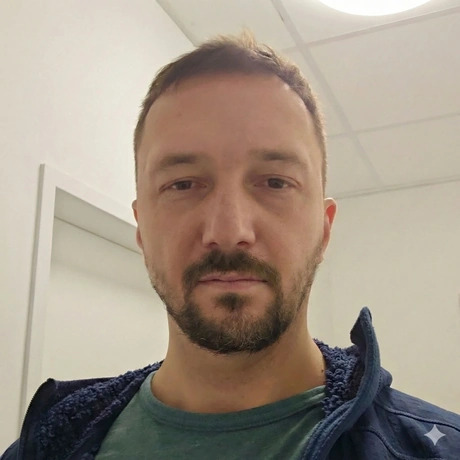
Andrey Minogin
Software Architect
Behavioral drift: silent bugs in LLM workflows
Andrey Minogin is a software architect and expert engineer specializing in performance-critical, data-intensive systems on the JVM — Postgres, concurrency, architecture, and production AI. He writes about engineering at minogin.com.
Talk Abstract
Someone edits a system prompt and accidentally drops one line. Same model, same code, same schema — but now everything quietly breaks downstream while still looking fine to humans and passing automated checks. This is behavioral drift: the implicit contract between an LLM and the code around it breaking silently. This talk examines why adding validation doesn't solve it — the failure happens at runtime, the change lives in the prompt, and the hardest cases are shifted meaning and distributions, not broken shapes. The alternative is to monitor behavior rather than constrain it: a kind of diff for AI behavior, including a small open-source tool built for it.
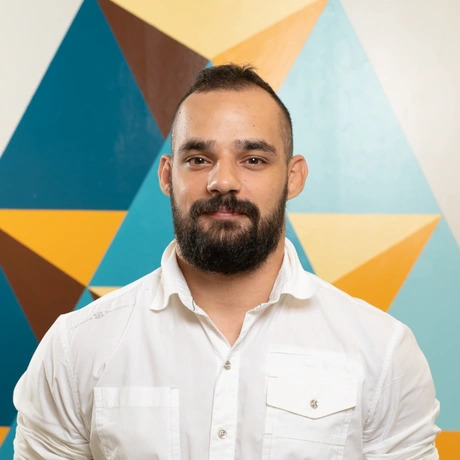
Miladin Kolarski
Head of Software Department at Bimexperts
From Game Development to BIM Software: Building Engineering Tools in Unity
Miladin Kolarski is Head of Software Department at Bimexperts, working at the intersection of Unity development, BIM/MEP workflows, and engineering software. His background spans game development, 3D tools, and real-time applications; today he leads the development of software products for HVAC/MEP planning, CAD/BIM workflows, room data, estimation, and automation.
Talk Abstract
Game engines are no longer used only for games. This talk shares practical lessons from moving from game development into building BIM/MEP software for engineers in Unity: where game development experience helps with visualization, interaction design, performance, and custom tooling — and where it fails when precision, coordinates, and engineering responsibility become critical. It also covers the human side: working with domain experts, dealing with pushback, and why user trust matters more than technical novelty.
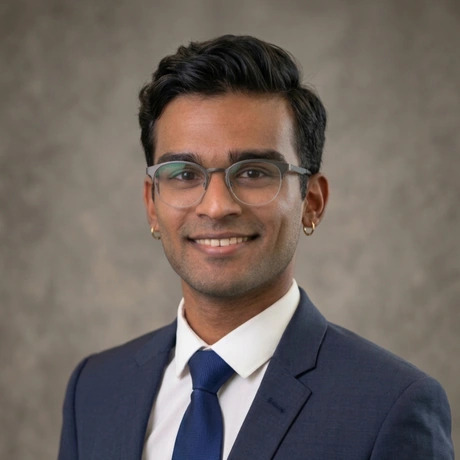
Surya Kannan Peesapati
Senior Scientist at AC2T research
From Black Box to Glass Box: Shipping Explainable AI in the Real World
Dr. Surya Kannan Peesapati is an AI Engineer and Applied Scientist based in Vienna. He holds a doctorate in Mechanical Engineering from TU Wien, where his thesis focused on integrating Explainable AI with mechanical systems. As Senior Scientist at AC2T, he designs and deploys end-to-end ML systems for predictive maintenance — from real-time sensor pipelines to containerized inference on production systems.
Talk Abstract
Everyone loves a high-accuracy model until it fails in production and nobody knows why. Drawing on real-world Explainable AI deployment at an industrial research center, this talk covers using SHAP to catch data leakage and build trust with domain experts, how upstream pipeline and architecture decisions affect downstream explainability, SHAP visualization patterns that actually communicate to a non-data-scientist audience, an honest look at where XAI breaks down, and how to containerize explainability workflows so explanations are reproducible.
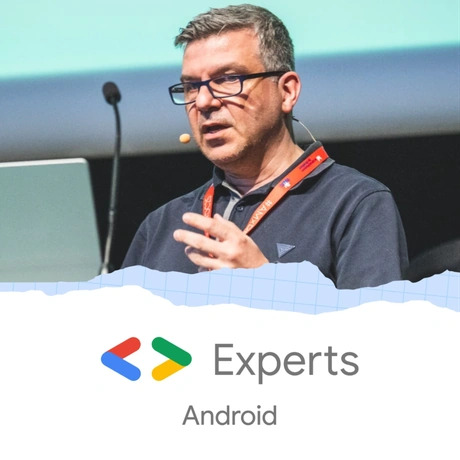
Ioannis Anifantakis
Google Developer Expert for Android
Context, Binder IPC, Zygote – The Android Internals Deep Dive
Ioannis Anifantakis is a Google Developer Expert for Android and a software engineer whose 25-year journey spans Windows desktop development, database design, and mobile engineering, with a passion for Android, Kotlin Multiplatform, and modern software architecture. A frequent conference speaker and computer science educator, he creates educational content on YouTube and Medium.
Talk Abstract
When you tap an app icon, a simple startActivity() call travels through Binder IPC, wakes the Zygote process to make a new copy of your app, and creates fresh Context objects — all in milliseconds, before the splash screen even appears. This session dives straight into Android's guts: how ApplicationContext is born from that pre-warmed Zygote copy, how ActivityContext applies themes and can leak memory, why ReceiverRestrictedContext is a strict Context that often says "no", how ActivityManagerService decides which processes stay alive — and five clear rules for building faster, safer apps.
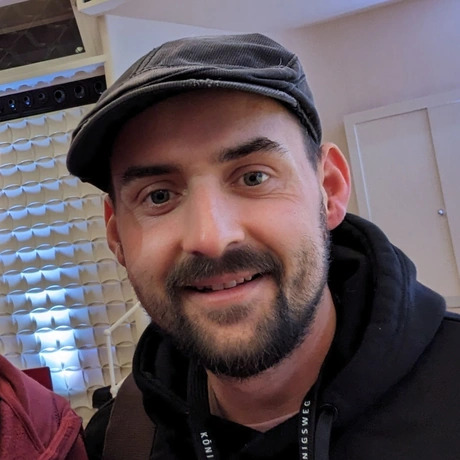
Gregor Riegler
Principal Software Engineer at Tricentis
Craft Still Matters
Gregor Riegler is a Principal Software Engineer at Tricentis, member of the Samman Technical Coaching Society, co-organizer of Software-Crafters Vienna, and maintainer of mob.sh. He is passionate about technical coaching — meeting teams and individuals where they are and helping them improve their software development skills while bringing joy to their work.
Talk Abstract
Coding agents do more and more of the work now. What does that mean for software craft — do we still need it, or can we just go with the vibes? Through real-world product development stories, this talk shares what it takes to work with coding agents: craft is the difference between an agent that ships and one that runs in circles. Learn principles and practices that help you guide an agent, avoid the complexity wall, and keep your steps small and verifiable to achieve higher quality at a lower cost.

Ondro Mihalyi
Java Champion, OmniFish co-founder
Building a Secure Java Software Supply Chain in the Era of the Cyber Resilience Act
Ondro Mihályi is a Java Champion, leader of CZJUG, the Czech Java User Group, and a conference speaker actively contributing to the Jakarta EE community and its specifications. He co-founded OmniFish, the company behind Eclipse GlassFish, which builds open-source Jakarta EE products and provides enterprise support for them.
Talk Abstract
Modern Java applications ship with many dependencies, making CVE tracking and remediation a continuous challenge. This talk describes how to build a secure Java supply chain using existing open-source tools — from understanding what's inside your applications through automated detection and remediation workflows, to real-life cases ranging from simple upgrades to backporting patches. Finally, we connect these practices to the EU Cyber Resilience Act. A live demo shows CVE detection, fixing, SBOM generation, and redeployment in a Java pipeline.
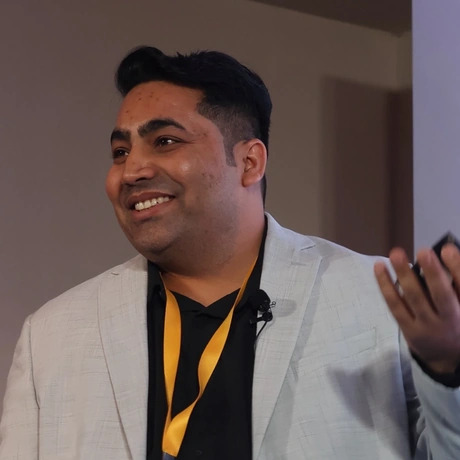
Rajan Sharma
Senior Principal Architect at iSpace
Your AI Agent Just Bought It: Securing Human-Not-Present Payments with AP2
Rajan Sharma is a Senior Principal Architect, technology speaker, and community builder focused on turning ambitious ideas into secure, production-ready systems. At iSpace he leads engineering teams building mission-critical, cloud-native products for the Next Generation 9-1-1 ecosystem. He is the creator and host of the "Demo to Production" podcast, and his current work explores how to give autonomous AI agents the authority to act without losing human control, accountability, and trust.
Talk Abstract
At 9:00 AM a limited number of concert tickets become available. At 9:00:01, an AI agent purchases two of them while its user is offline. How does the merchant know the user authorized this specific purchase? Who is accountable if the agent misunderstood the request? Traditional payment systems were built around a human clicking "Buy" — autonomous agents break that assumption. This session explores Google's open Agent Payments Protocol AP2 and its model of cryptographically verifiable Mandates, following a Human-Not-Present transaction from instruction through checkout and payment authorization, and where AP2 fits alongside A2A, MCP, and UCP.
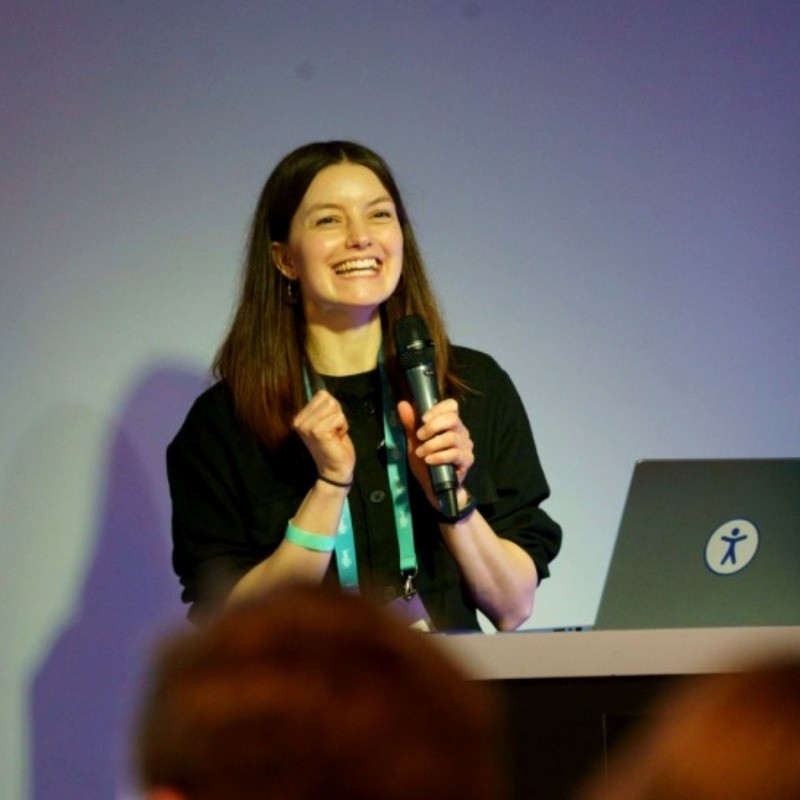
Josefine Schaefer
Accessibility Engineer at Storyblok
AI for Accessibility - Future or Fail?
Josefine Schaefer works as an Accessibility Engineer at Storyblok and is part of the Google Developer Experts program in the web category. She cares deeply about DE&I in the tech industry and beyond, and is passionate about all things frontend, inclusive communities, and web accessibility. Based in Hamburg, she travels the world talking about web accessibility.
Talk Abstract
Vibe coding has drastically increased the complexity of webpages — and is reproducing accessibility issues at lightning speed, since LLMs trained on decades of inaccessible code are largely inaccessible by default. Let's move past the hype and explore how to break this destructive cycle: how can we use AI to produce more accessible solutions at scale, where are guardrails needed, and should we provide fully customized experiences? A journey through the role of AI in the future of accessibility — with a healthy dose of skepticism.
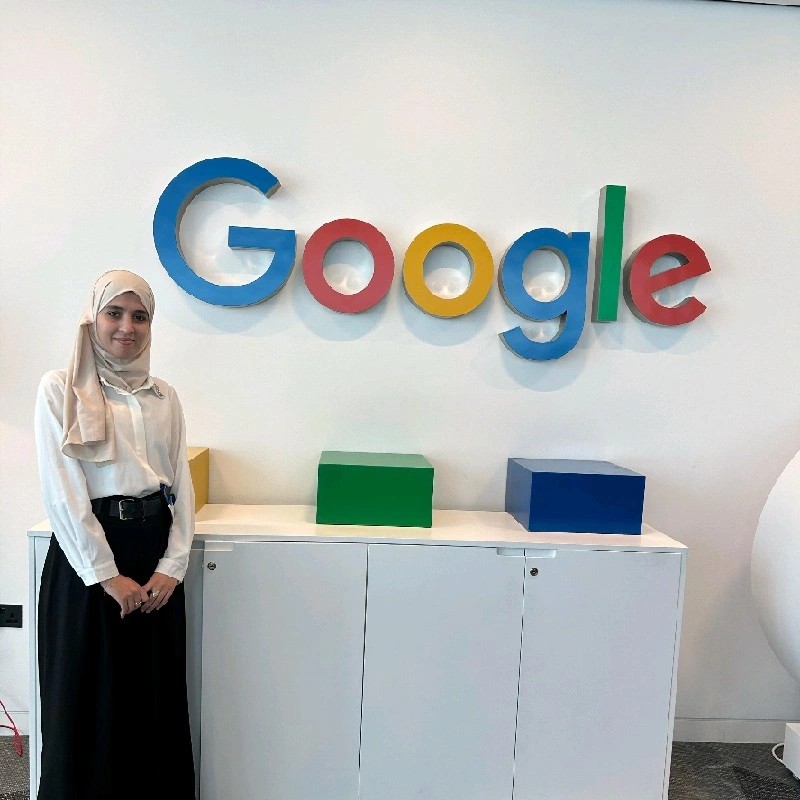
Asma Merabet
AI Engineer, GDG Setif Lead
When AI Says It's Cancer: Building Explainable Medical AI Doctors Can Trust
Asma Merabet has 7+ years of experience in artificial intelligence, software development, and technical coaching. As a lead at GDG Setif she organizes events and workshops across the MENA region. Her work focuses on integrating AI into healthcare — early disease detection, clinical decision-making, and multi-cancer screening — keeping technology transparent, explainable, and aligned with real medical needs.
Talk Abstract
AI models that achieve 99% accuracy mean nothing if the doctor can't understand why. This talk walks through building a real medical decision support system for colon cancer diagnosis — grounded in PhD research, two real-world datasets, and clinician feedback. We'll dive hands-on into Grad-CAM and LIME on histopathology images, see what they reveal and where they fail, and cover few-shot learning with Prototypical Networks that learns new cancer subtypes from as few as 50 labeled examples — plus an honest post-mortem of what broke, what surprised us, and what we'd do differently.